
AI in Manufacturing : Transforming Industrial Operations Through Intelligence
Date: 10/8/2025 12:00:00 AM
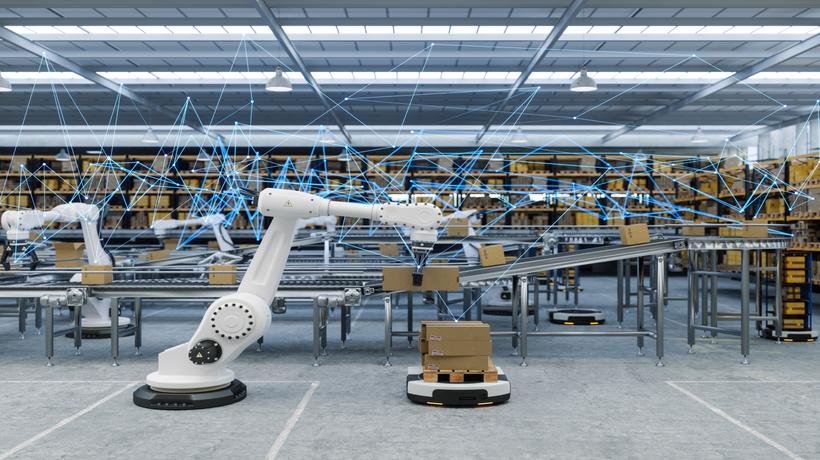
As global manufacturing faces increasing pressure to reduce costs, improve quality, and accelerate time-to-market, AI emerges as a critical enabler of smart manufacturing initiatives. This technological evolution represents more than just automation—it's about creating intelligent systems that can learn, adapt, and optimize manufacturing operations in real-time.
What Is AI in Manufacturing?
AI in manufacturing is the application of machine learning (ML), computer vision (CV), natural language processing (NLP), and predictive analytics to make production systems smarter and more adaptive. Instead of relying only on fixed rules, AI-driven systems learn from historical and live data, recognize patterns, and recommend—or automatically take—actions that optimize safety, quality, and throughput.In practice, AI connects to sensors, machines, and business systems to continuously interpret conditions on the line, anticipate issues before they escalate, and fine-tune processes in real time. The result is faster decisions, fewer disruptions, and a consistent lift in operational performance.
Predictive Maintenance
Use multi-sensor data (e.g., vibration, temperature, current) with ML models to forecast failures before they happen, enabling planned interventions that cut unplanned downtime and maintenance costs.
Computer Vision for Quality Control
Deploy high-speed CV inspection to detect defects, color and surface anomalies, dimensional drift, and labeling/packaging issues in real time, ensuring consistent product quality at line speed.
Production Process Optimization
Continuously adjust setpoints, sequences, and resource allocation based on live conditions and constraints to stabilize yield, reduce cycle time, and maximize overall throughput.
Supply Chain Forecasting
Predict demand, inventory needs, and logistics timelines more accurately to synchronize procurement, production, and distribution—reducing stockouts and excess working capital.
For faster edge-to-cloud implementation and governance, platforms like Advantech IoTSuite provide open, low-code tools to connect OT/IT data sources, orchestrate services, and deploy AI models at scale across sites.
Key Benefits of AI in Manufacturing
The implementation of AI technologies in manufacturing environments delivers transformative benefits that far exceed traditional automation advantages. These intelligent systems enable manufacturers to enhance efficiency, quality, and responsiveness across all stages of production.
Increased Production Efficiency
AI uses real-time data to optimize manufacturing parameters, cutting cycle times and boosting throughput. Studies from government-backed programs show productivity gains of 20-50% in key areas after AI adoption.Studies from government-backed programs show productivity gains of 20–50% in key areas after AI adoption (NIST).Smart AI scheduling adapts production plans based on demand, materials, and equipment status, reducing idle time and work-in-progress inventory. These systems learn from past data to improve accuracy continuously.
Key efficiency metrics demonstrate this impact clearly :
- Overall Equipment Effectiveness (OEE) improves from 60-70% to 80-90% (ISO 22400 standards).
- Production Planning Accuracy rises from 75-80% to 88-95% (NIST benchmarks).
- Equipment Utilization increases from 65-75% to 80-88% (ISO 50001 guidelines).
Improved Quality Control and Defect Detection
AI-powered quality control systems can inspect products at speeds and accuracy levels impossible for human operators. Computer vision systems can detect microscopic defects, color variations, dimensional inconsistencies, and surface imperfections in real-time, ensuring only products meeting exact specifications reach customers.These systems learn from each inspection, building comprehensive databases of defect patterns and root causes. Advanced AI models can even predict potential quality issues before they occur, enabling preventive measures that reduce waste and rework costs significantly.
Predictive Maintenance and Reduced Downtime
This proactive approach reduces unplanned downtime by up to 70% and extends equipment lifespan by 20-40%, according to industrial efficiency standards and studies supported by the U.S. Department of Energy's Industrial Technologies Program. Maintenance teams can schedule repairs during planned downtime, optimize spare parts inventory, and focus resources on equipment most likely to experience issues.
Enhanced Supply Chain Visibility and Management
AI transforms supply chain management by providing unprecedented visibility into global networks of suppliers, logistics providers, and distribution channels. Machine learning algorithms analyze multiple variables—from weather patterns to geopolitical events—to predict supply disruptions and recommend alternative sourcing strategies.Intelligent inventory management systems optimize stock levels across multiple locations, reducing carrying costs while ensuring material availability for production schedules. These systems can automatically adjust procurement plans based on demand forecasts and supplier performance metrics.
Real-Time Decision Support
AI systems provide manufacturing managers with real-time insights and recommendations based on comprehensive data analysis. Digital dashboards powered by AI highlight critical issues, suggest optimization opportunities, and enable rapid response to changing conditions on the factory floor.
Real-World Applications of AI in Manufacturing
Predictive Maintenance for Heavy Industry
Steel, cement, and chemical production facilities implement comprehensive predictive maintenance programs can use IT systems integration module in Advantech IoTSuite (DataInsight) to monitor critical rotating assets and high-temperature furnaces. Advanced AI models anticipate bearing wear patterns, thermal drift anomalies, and pressure system irregularities, enabling maintenance teams to schedule interventions during low-impact operational windows while verifying post-repair system stabilization through continuous live trend monitoring.Food & Beverage Safety and Compliance
Food processing facilities deploy integrated vision and sensor analytics systems to validate sanitation procedures, monitor cooking and holding temperatures, and ensure packaging integrity throughout production cycles. Intelligent AI agents automatically generate audit-ready compliance records and notify operators immediately when product specifications approach out-of-tolerance conditions, preventing non-compliant products from reaching downstream distribution processes.
Campus-Scale Operations at Advantech Linkou
At Advantech Taiwan Manufacturing Center (ATMC), multiple generative AI applications coordinate complex production scheduling, facility energy optimization, comprehensive predictive maintenance, and real-time operational analytics. This implementation demonstrates how advanced agentic AI patterns orchestrate workflows across integrated manufacturing environments, accelerating digital transformation initiatives while maintaining operational excellence standards.
Pharmaceutical Production Compliance
Pharmaceutical manufacturers utilize AI systems for batch process optimization, contamination detection, and regulatory compliance documentation. These applications ensure consistent drug potency while automatically generating FDA-compliant production records and maintaining strict chain-of-custody documentation requirements.
Challenges of Implementing AI in Manufacturing
Workforce Upskilling and Change Management
AI integration requires substantial changes in workforce skills and organizational culture. Many manufacturing employees may feel threatened by AI implementation, fearing job displacement or feeling unprepared to work with advanced technologies.
Successful AI implementation requires comprehensive training programs that help workers develop new skills while emphasizing how AI augments rather than replaces human capabilities. Advantech addresses this challenge through comprehensive training programs and user-friendly interfaces that make AI technologies accessible to workers with varying technical backgrounds.
Data Availability and Infrastructure Readiness
AI systems require vast amounts of high-quality data, but many manufacturing facilities lack comprehensive data collection infrastructure. Legacy equipment may not have sensors or connectivity capabilities needed for AI applications.
Data quality issues—incomplete records, inconsistent formats, and measurement errors—can significantly impact AI system performance. Advantech addresses these challenges through WISE-DataInsight, which supports over 30 heterogeneous data types with unified ETL management and features an AI-powered data assistant for natural language querying.
Integration Complexity and System Compatibility
Manufacturing facilities typically operate diverse equipment from multiple vendors, spanning decades of technology generations. Integrating AI systems with legacy equipment presents significant technical challenges, requiring adherence to international standards such as IEC 62264 for enterprise-control system integration.
Different communication protocols and software architectures must be harmonized to enable seamless AI implementation. This complexity often requires custom development work and extensive testing to ensure system reliability.
Cost Justification and ROI Measurement
AI implementation requires substantial upfront investment in technology, infrastructure, and training. Manufacturing executives need clear ROI models and success metrics to justify these investments and track implementation progress.
Quantifying AI benefits can be challenging, particularly for improvements in quality, safety, and employee satisfaction. Phased implementation approaches can help manage costs and demonstrate value incrementally, building organizational confidence for broader AI initiatives.
Skills Gap and Talent Acquisition
The manufacturing industry faces a significant shortage of professionals with both manufacturing expertise and AI/data science skills. This talent gap creates competition for qualified personnel and increases implementation costs.
Advantech’s AgentBuilder helps bridge this gap by providing an Agentic AI development platform powered by generative AI, enabling businesses to rapidly scale production capacity while enhancing the role of the human workforce. The platform not only accelerates AI deployment but also focuses on critical industrial priorities to maintain product quality, mitigating operational risks, and empowering employees with intuitive AI-driven tools.
AI, IoT, and the Rise of Smart Manufacturing
The future of manufacturing lies in the convergence of AI and Industrial Internet of Things (IIoT)—where machines, sensors, and analytics platforms work together to create adaptive, intelligent production environments.Advantech provides end-to-end smart manufacturing solutions that integrate AI, IoT, and industrial computing technologies. Their comprehensive platform approach enables manufacturers to implement intelligent systems that deliver measurable business value.
The integration of 5G connectivity, edge computing, and advanced AI will enable new levels of real-time responsiveness and system-wide optimization. Smart manufacturing represents a fundamental transformation of how products are designed, produced, and delivered to customers.
Contact Us
Advantech is dedicated to supporting your company to build a safe environment and increase management efficiency. Our experts are here to guide you through each step of implementing effective, sustainable solutions. Please reach out to our team at Contact Us.
Join our community to see more industry insight:
.png)
